

The trees around your home provide shade, beauty, and fall color that signals winter is on its way. But when a hurricane, tornado, or winter storm hits Virginia, those same trees can put your property at risk. While homeowners insurance may help cover tree-related damage, depending on your policy and the circumstances, regular tree care can help protect your home and reduce the need to file a home insurance claim.
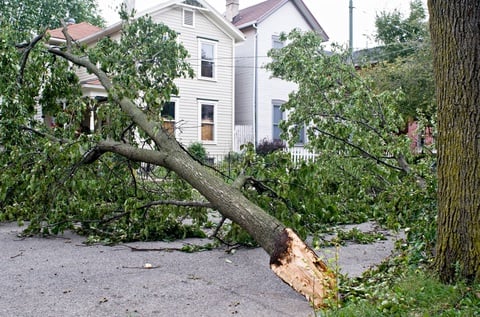
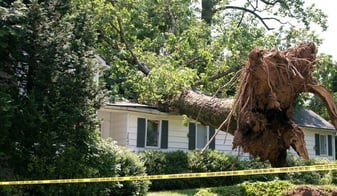
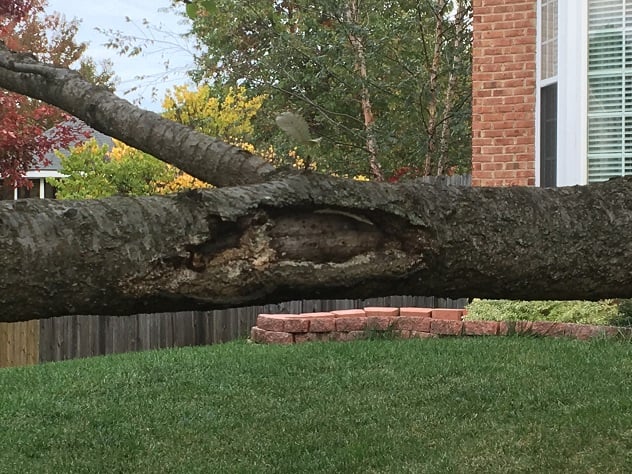
In April 2018, this large tree branch came down in Irvington, VA, from an EF1 tornado.
How Trees Can Damage a Home
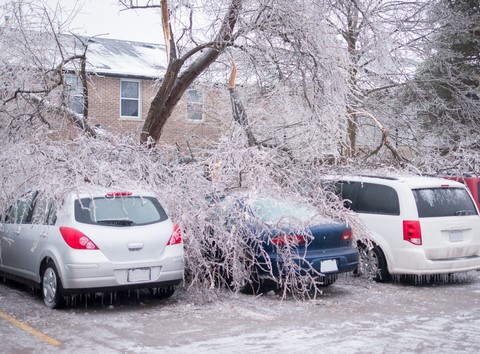
A mature oak tree can top out at over 80 feet, weigh in at 20,000 pounds or more, and become a massive threat to your home. A tree that size is not something you want dropping on you during severe weather! The weight of ice from a winter storm can result in high crown breakage and trees can also split or lose major limbs. Severe weather can produce winds that cause large branches of trees to snap and shallow-rooted trees to topple.
A home can handle a tree falling on it depending on the size of the tree and the areas of the home that are damaged, but it can still cause extensive and costly damage. The Duvall family's story says it all. Kate and Dan were preparing their home in anticipation of the couple's first child when a large tree brought catastrophic damage to their forever home. We worked closely with our local independent agent to help the Duvalls restore their home.
We know from these types of member experiences that your home needs to be protected. While homeowners insurance policies cover tree-related damage, most can be prevented with proper tree choice and placement when planting new trees and two simple maintenance practices.
How to Prevent Tree Damage to Your Home
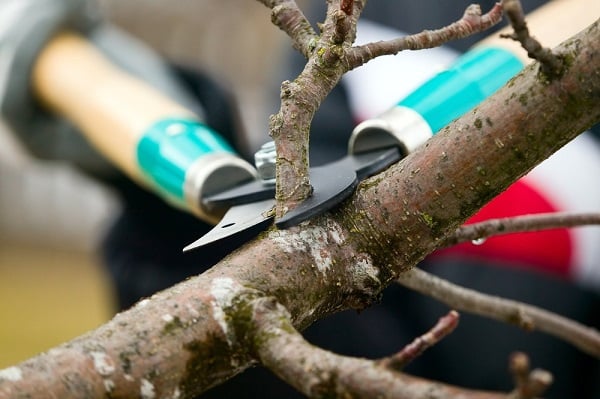
1. Prune Trees Near Your Home
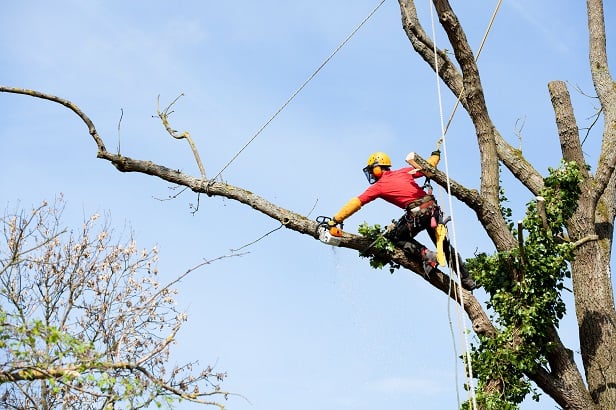
Make tree care part of your seasonal home maintenance, paying particular attention to dead, damaged, or overhanging branches. Ask a certified arborist about the best pruning schedule for your trees and how much clearance to maintain between branches and your home. Leave large limbs and work near power lines to qualified professionals.
Keeping vegetation and dead branches away from your home can help reduce wildfire risk during Virginia’s fall fire season. It also helps you prepare for winter storms, when ice can weigh down branches and cause them to break. Addressing potential hazards before severe weather arrives can help protect your home and property.
2. Inspect Your Trees for Signs of Trouble
Take a look at your trees from the ground, checking the branches, trunk, and area around the roots. Sparse or unhealthy-looking foliage during the growing season may signal a problem, but leaves alone don’t tell the whole story. Look for these warning signs, and ask a certified arborist to evaluate any concerns.
Signs a tree may be unhealthy:
- Mushrooms growing around the tree's roots
- Rainwater pooling around the tree's base
- Leaning with cracked or buckling soil or exposed roots on the opposite side
- Multiple V-shaped trunks vs. U-shaped. V-shaped are prone to splitting
- Signs of illness: Lack of foliage, fungus, or carpenter ants at the base of the tree, hollow pockets, cavities, or decay
- Signs of damage: Exposed roots, peeling bark, deep cracks, partially detached or suspended limbs or stem tops
If you're unsure about your tree's health or think it should be pruned or removed, we recommend avoiding drive-by solicitations that may not have proper training and certification. It's best to consult a certified arborist in Virginia. These specialists are skilled tree-care professionals.
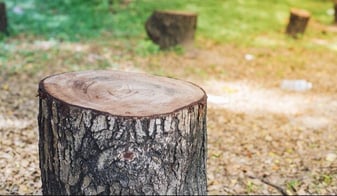
If a tree in your yard is beyond help or looks dead, it should be removed immediately. Taking down a leaning, dead, rotting, or unwanted tree before it falls is considered routine property maintenance or upkeep, which is an out-of-pocket expense. It may or may not be safe to remove your tree yourself. This job is usually better for an insured and licensed professional tree removal service.
When Does Homeowners Insurance Cover Damage From Fallen Trees?
While regular maintenance is the best way to protect your home and property, trees sometimes fall. If an insurer warns you that a dying tree poses an obvious hazard and you fail to remove it, the insurance company may deny subsequent claims if that tree eventually falls and causes damage. If your tree or your neighbor's tree causes damage to your property, file a claim with your home insurance carrier. Homeowners insurance may cover damage after a tree falls on your home or another covered structure because of a covered event, such as wind or lightning. Coverage can apply whether the tree grew on your property or your neighbor’s, but your policy’s deductible, limits, and exclusions determine what may be paid.
Tree removal may also be covered when the fallen tree damages a covered structure, subject to policy limits. If it falls in your yard without damaging a covered structure, removal generally isn’t covered, though exceptions may apply when it blocks a driveway or an accessibility ramp. Routine pruning and preventive tree removal are generally your responsibility. Ask your local independent agent to review your policy so you understand what protection you have before a storm arrives. Contact your local independent agent or call us with severe weather-related claim questions. We're right here and ready to help!

THE NORTHERN NECK INSURANCE INTEGRITY PROMISE — We pledge to provide straight talk and good counsel from our NNIC Virginia insurance experts through our blog. While we hope you find this to be a helpful source of information, it does not replace the guidance of a licensed insurance professional, nor does it modify the terms of your Northern Neck Insurance policy in any way. All insurance products are governed by the terms in the applicable insurance policy.