From Halloween through New Year’s, the holidays are packed with activity in and around your home. While this time of year brings decorating fun and festive celebrations, it can also bring an increased season of homeowners insurance risk. Many people are busy shopping, baking, and entertaining, and that distraction may be part of the problem. With so much going on, taking a few extra moments to focus on safety and risk mitigation is especially important.
Knowing what to avoid—and how to prevent costly, dangerous claims or potential lawsuits—is especially important in three major holiday risk areas: fire damage, homeowners liability, and theft. In the meantime, explore the risks our insurance experts see during the holiday season and learn how to reduce them.
Holiday home insurance fire risks
While unattended cooking is the leading cause of home fires and home fire injuries, holiday fire risks also increase with the use of candles, supplemental heat sources, and combustible decorations placed too close to live Christmas trees.
Holiday cooking fire risks
Thanksgiving is #1 for cooking fires, followed by Christmas Day and Eve, largely due to unattended cooking, distractions, loose clothing, and crowded kitchens. Two-thirds (66%) of home cooking fires start with the ignition of food or other cooking materials, and ranges or cooktops account for over half (51%) of home cooking fire incidents. The good news is cooking fires are preventable when you take precautions, especially around the busy holidays.
Home cooking safety tips
The National Fire Protection Association (NFPA) recommends the following top cooking safety tips:
- Stay in the kitchen when you are cooking on the stovetop so you can keep an eye on the food.
- Stay in the home when cooking your turkey, and check on it frequently.
- Keep children away from the stove. The stove will be hot and kids should stay three feet away.
- Make sure kids stay away from hot food and liquids. The steam or splash from vegetables, gravy or coffee could cause serious burns.
- Keep knives out of the reach of children.
- Be sure electric cords from an electric knife, coffee maker, plate warmer or mixer are not dangling off the counter within easy reach of a child.
- Keep matches and utility lighters out of the reach of children—up high in a locked cabinet.
- Never leave children alone in a room with a lit candle.
- Keep the floor clear so you don’t trip over kids, toys, purses or bags.
- Make sure your smoke alarms are working. Test them by pushing the test button.
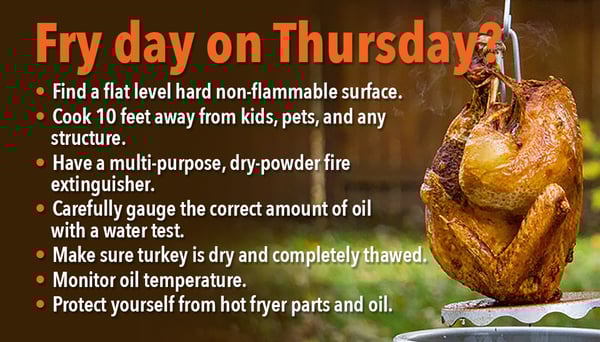
Turkey fryers—common for Thanksgiving—also pose significant home risks if not used properly.
Candles, electric lighting, and lithium battery fire risks
Candle fires peak in December and January, with 12 percent of candle fires occurring in December and 10 percent of candle fires occurring in January. Holiday decorations, including lighted displays and traditional candles on a mantle or in a jack-o-lantern, can start a fire if left unattended. Use LED lights or battery lights instead, and be sure to use UL-listed electric lights suited for the right use rather than cheaper brands.
Outdoor light strings are specifically tested and rated for damp or wet locations. If a light set is not sealed against moisture, it may fail after exposure to moisture, heavy rain or snow. More importantly, if the fixtures or cords are not corrosion-resistant, they can become an electrocution hazard as the insulation breaks down and exposes electrical connections. The rule of thumb is: outdoor-rated lights can safely be used indoors, but indoor-only lights should never be used outside.
During the holiday shopping and gift‑giving season, many popular presents are powered by lithium‑ion batteries. These batteries are used in a wide variety of devices, including smartphones, laptops, e‑scooters, e‑bikes, toys, and even vehicles. However, lithium‑ion batteries can pose a significant home insurance risk if they are poorly manufactured, damaged, used incorrectly, or charged improperly, They may overheat, catch fire, or even explode, creating a serious fire hazard in your home.
Christmas tree fire risks
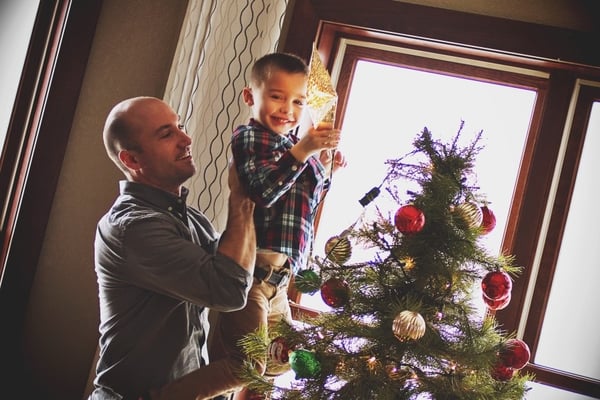
Fires from Christmas trees are less common, but when they happen, they can result in a total home loss. Nearly half of home Christmas tree fires are caused by electrical problems. Nearly 25% of Christmas tree fires (opens in a new window) are from heat sources—such as fireplaces, radiators, and candles—placed too close to the tree. In addition, nearly half of all holiday decoration fires start because decorations are positioned too near a heat source. Real Christmas trees are three times more likely than artificial trees (opens in a new window) to be involved in a Christmas tree fire but can still catch fire. Always be sure to buy a flame-resistant model.
Fire researchers found that a dry live Christmas tree can become fully engulfed in flames in less than 10 seconds, with “flashover”—when the fire spreads rapidly to nearby materials—occurring in about 70 seconds after an unwatered tree is ignited. By contrast, a well-watered tree is far less likely to allow flames to spread beyond the initially burning branches.
Dried-out Christmas trees can remain a fire hazard after the holidays. Be sure to recycle or dispose of your tree as soon as possible after the holidays. It's important to not leave a dead tree in your garage or leaning up against your house.
Holiday home insurance liability risks
Whether it's trick-or-treaters, Christmas carolers, or guests invited to your home for a holiday party, risks involving injury or damage to people and property increase throughout the holiday season. Based on home insurance claims between 2019-2023, the Insurance Information Institute found the average cost of bodily injury and property damage liability claims was $37,174, only second to wind and hail claims. From alcohol use and trips and falls to dog bites, homeowners can be exposed to all kinds of liability claims.

General home visitor liability risks
With all the festivities that happen around the holidays, it’s important to think about the general safety with the accessibility of your home. When you welcome someone to your home, they are considered legal guests or "licensees" on your property, and you are responsible for maintaining safe conditions. Failure to do so can lead to liability claims under your homeowner's insurance policy. Halloween is notorious for decorations that suddenly move or make loud noises that might cause a visitor to stumble or fall. A homeowner could be held liable if a prank intended to scare a visitor directly causes an injury.
When it comes to pathways, consider the already encumbered trick-or-treaters, family and partygoers, carolers, and other holiday visitors. Walkways and stairs should be clear of electrical cords, decorations, and clutter and very well lit. Fall wet leaves can be as slippery as winter's snow and ice on walkways. Regardless of the weather, be sure to address any loose steps, cracked pavement, or holes in the yard. If a repair is not possible, clearly mark the hazard with visible signs.
If you do not want trick-or-treaters to come to your house on Halloween, turn your porch lights off but make sure you have some sort of motion detector lighting. Most people will avoid approaching, and if someone does come to your home, the sudden lights should discourage them from lingering.

Alcohol use liability
Although Virginia does not have "dram shop" or "social host" liability laws that allow an injured person to sue a host for damages caused by an intoxicated guest of legal drinking age, the host can be held liable for injuries or property damage from an inebriated guest. You can even be held liable if your guest injures a third party or if passengers riding with your guest are hurt in a car accident.
Be a responsible party host by providing plenty of food, water, and non-alcoholic options. Do not allow an intoxicated guest to continue drinking or to drive and model responsible consumption. You will be better able to judge your guests’ sobriety and foresee problems before they arise. You may even want to consider other venues for your holiday party or extra insurance outside of your standard home insurance policy to cover yourself.
Pet-related injury liability
A dog is more than just a pet; they are family members. This can make it difficult to view your dog as a potential liability. But the holidays can be very stressful for pets. Imagine Halloween and parties through your pet's eyes: unusual costumed strangers and unwelcomed attention. Dog bites remain a serious public health risk, with more than 4.5 million people—mostly children—bitten each year nationwide, with an average cost per claim at $58,545. Personal umbrella insurance may be an option, but be sure to disclose what breed of dog you have to your insurance carrier. Certain dog breeds that are associated with a higher likelihood of aggression or fear‑based biting may be excluded from coverage under some insurance policies.
If you have a pet that has shown aggression or is not accustomed to children or unfamiliar visitors, it is especially important to take extra precautions when hosting. Even dogs that have never bitten anyone can become overwhelmed by well‑meaning, animal‑loving guests who approach too quickly or do not recognize warning signs. Even an overly friendly dog can unintentionally cause injuries by jumping, knocking someone over, or causing a trip and fall. During holiday gatherings, keep all pets secured indoors, ideally in a quiet room away from the front door and main activity areas, to reduce stress for your pet and help prevent dog bites or accidental injuries.
Celebratory gunfire liability
Alcohol is not the only home insurance liability for holiday party hosting. Celebratory gunfire is a common occurrence surrounding New Year's festivities, but can be dangerous and deadly, and it’s also illegal in Virginia, leading to felony charges. A bullet fired into the air can travel over a mile high and return at speeds fast enough to penetrate a skull, making it a deadly hazard. Keep the firearms put away and locked up for the safest legal celebration!

Holiday fireworks liability
Any firework that explodes, moves on the ground or in the air, or shoots a projectile is illegal in VA. Check local ordinances on the legal use of fireworks and refrain from use while drinking alcohol. Even legal sparklers/fountains in some Virginia jurisdictions can cause fires or injuries, making the user liable for damages/injuries under negligence laws and home insurance claims. It's best to leave the New Year's firework displays to the professionals (opens in a new window).
Holiday theft and vandalism risk
The movie Home Alone is a hilarious caricature of holiday crime. From smashed pumpkins and slashed inflatables to porch pirates snatching holiday gifts off your front porch, holiday theft and vandalism can bring costly home insurance claims. While Halloween events can bring its own insurance risks to homeowners, December is often the peak month for property crimes, driven by more homes being empty and increased e-commerce deliveries, according to FBI and security data.
To reduce your risk for porch theft, consider securing your packages and perhaps installing smart home cameras or doorbells. This can help if you leave town during the holidays to visit friends and family as well. For delivery of expensive holiday items, you can require a signature to leave a package or have the package dropped in a secure location, like a locker. Leaning on your neighbors to watch your doorstep and occasionally sign for items can help too.
To reduce the risk of vandalism and theft on your property, Safehome.org recommends the following measures:
- Install security fencing around your property. A well‑placed fence can help deter would‑be vandals, especially when paired with clearly visible “No Trespassing” signs.
- Use quality locks and, where appropriate, security glass. Restricting access to areas where people should not be is an effective way to reduce the chance of vandalism. You may also want to consider investing in a professionally monitored home security system that fits your needs and budget. This can get you a home insurance discount on your premium too!
- Install bright, motion‑activated exterior lighting. Because vandals generally prefer not to draw attention to themselves, sudden, bright motion‑activated lighting can deter them from approaching your home or yard.
- Consider security cameras. A visible network of security cameras or a video doorbell can discourage vandals and help document any incident that does occur, which may be useful for both law enforcement and potential insurance claims.
- Promptly clean up any vandalism. If your property is damaged despite your precautions, repair and remove graffiti or other damage as soon as possible. Leaving vandalism unaddressed can invite repeat incidents and more extensive damage over time.
The holiday season is also a time when cybercrimes escalate. From personalized gift ideas to one-click shopping, AI and social media have become go-to tools for holiday convenience. Over 54% of people now buy directly from social media ads, and half plan to use social platforms to help find gift ideas, up from 39% last year. Unfortunately, more than 50% of scams on these platforms originate from fake ads and dishonest sellers. In addition, phishing scams, credit card fraud, and identity theft are particularly common during this time.
Have the right home insurance coverage for the holidays
Reducing these home insurance risks not allow you to protect your property and prevent claims, but it can also help keep your home insurance premiums down. Keep in mind that your home insurance policy may cover accidental damage from these risks, but not in every situation. Intentional acts or gross negligence that result in property damage are examples of events that are not covered by homeowners insurance. Talk with your local insurance expert about your specific situation well before the holidays so you can confirm you have appropriate home insurance protection in place for the season.
Sources:
https://www.nfpa.org/education-and-research/home-fire-safety/winter-holidays
https://www.iii.org/fact-statistic/facts-statistics-homeowners-and-renters-insurance
https://www.nfpa.org/education-and-research/home-fire-safety/thanksgiving
https://www.fbi.gov/news/press-releases/fbi-releases-2024-reported-crimes-in-the-nation-statistics
https://www.safehome.org/