Virginia has four seasons and each of them can include the challenging driving conditions associated with wet pavement. Winter's snow and ice bring serious driving hazards with so little experience compared to our northern neighbors. Spring and summer bring their driving dangers as severe weather rolls through and vacations uptick travel. Even our beautiful fall season can bring unique dangers for drivers.
Why Wet Roads Increase Your Risk of a Crash
Rain can make even familiar Virginia roads harder to navigate. Water mixes with oil and other residue on the pavement, reducing traction, while rain and spray make it harder to see other vehicles and for other drivers to see you. Heavy downpours can also cause roads to flood quickly.
Slowing down, turning on your headlights, and leaving more space between vehicles can help reduce your risk of a crash. Our NNIC claims team sees the effects of wet-weather driving firsthand. The tips below can help you prepare for rainy conditions and make safer decisions behind the wheel.
Tips for Driving Safely in Rain
Start with Regular Car Maintenance
Maintaining working headlights, tail lights, wiper blades, and tires is key to driving safely in the rain. A clean interior windshield is important as well and often gets ignored. Water is most likely the most shallow in the center of the road following the tracks of cars ahead of you. Avoid passing other cars and maintain a safe distance. The tread on your tires greatly impacts your car's traction on the road. Bald tires severely reduce traction. Regularly check the air pressure in your tires and be sure they are properly inflated.

Consider Delaying Your Travel Plans
Sometimes it just makes sense to stay home if you can. Driving in heavy rain at night is one of the most dangerous times to drive because water scatters light, intensifies glare from oncoming headlights, and sharply reduces your visibility and traction. Check the weather and road conditions, especially when heavy rains in a short period are forecasted. Roads can flood quickly, resulting in dangerous driving conditions. Never drive through flood waters. Roads covered by water are prone to collapse. It's also tough to tell how deep the water is, and your car can quickly get overcome. Even lower levels of water can cause your car to stall because they can be pushed higher by larger passing vehicles. Trying to restart your car after a flooded engine can cause irreparable damage.
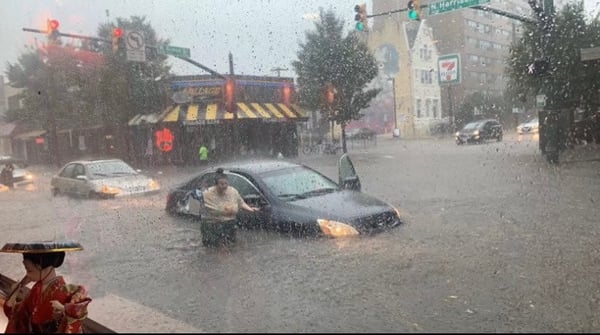
Check out these flooded roadways in downtown Richmond when nearly three inches of rain quickly fell one summer afternoon in 2021.
Consider The Best Route
If you can't avoid travel, consider which route makes the most sense if rain is imminent. Avoid low-lying roads or those prone to flooding. Pay attention to barricades and never drive past them. If you come across a flooded roadway, turn around and go a different way. If caught in a flooded roadway or parking lot, drive slowly to higher ground.
Use Your Headlights and Turn Signals
Using headlights while diving in the rain is a Virginia law. Law 46.2-1030 states that every vehicle on a commonwealth highway should have lighted headlights when windshield wipers are in use due to fog, rain, sleet, or snow. This law also requires windshield wiper use when rain, smoke, fog, snow, sleet, insufficient light, or other unfavorable atmospheric conditions reduce visibility by 500 feet.
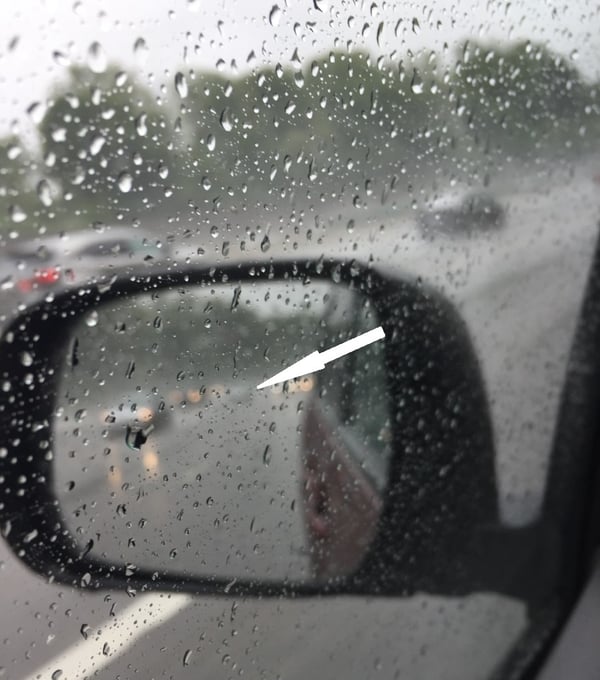
Can you spot the car with no headlights on in the side mirror? It's super hard to see!
Don't rely on daytime running lights alone in rainy weather, as they may not turn on your tail lights. Switch on your low-beam headlights so drivers can see you from both the front and rear, and use your turn signals before turning or changing lanes. Avoid high beams in the rain: their glare can make it harder for you and other drivers to see. Check your owner's manual if you're unsure how your vehicle's automatic lights work.
Lower Your Speed
The posted speed limit isn't a target you need to maintain in the rain. Wet pavement reduces traction, and poor visibility can give you less time to spot hazards. Slow down to match the conditions, leave extra space behind the vehicle ahead, and allow more time to stop. If another driver gets impatient with you and follows too close, pull over or stay in the right lane on the highway and let them pass.
Reducing your speed can also lower your risk of hydroplaning, when your tires lose contact with the road and ride on a layer of water. It doesn't eliminate that risk, so ease off the accelerator as conditions worsen and avoid sudden braking or sharp steering. If the rain makes it difficult to see the road ahead, find a safe place away from traffic to stop and wait for conditions to improve.
How to Respond if Your Car Starts Hydroplaning
The automatic acceleration and traveling at higher speeds when roads are wet can cause you to lose control, called hydroplaning. Hydroplaning happens when your tires lose grip and ride on a thin film of water on the road. It dramatically reduces your ability to safely brake and accurately steer. For this reason, it's avoid using cruise control when driving on wet roadways.
If you begin to hydroplane, regain control with these steps to avoid a collision:
- Take your foot off the gas pedal
- Calmly and gently steer in the direction you are trying to go.
- It may take several attempts to steer out of the skid, but you can get back on course and potentially avoid a crash.

We're close by and ready to help
Staying safe while driving is simple if you make the effort to follow a few of these safety precautions. Two of the most effective ways to avoid an accident in the rain are by using your headlights and tail lights and reducing your speed. If you have an insurance claim, we're right here and ready to help.
Learn more about car insurance in Virginia
THE NORTHERN NECK INSURANCE INTEGRITY PROMISE — We pledge to provide straight talk and good counsel from our NNIC Virginia insurance experts through our blog. While we hope you find this to be a helpful source of information, it does not replace the guidance of a licensed insurance professional, nor does it modify the terms of your Northern Neck Insurance policy in any way. All insurance products are governed by the terms in the applicable insurance policy.