What is a Homeowners Insurance Gap?
Many homeowners assume their home insurance is like a savings account and that their policy covers 'everything' when the worst happens. In reality, your homeowners policy is a specific legal contract, and anything not clearly listed as covered is generally excluded. A standard homeowners policy (often an HO-3 or HO-5 form) typically protects against common perils such as fire, lightning, and theft, but it may not automatically cover damage from other types of events. After decades of covering home insurance claims, we never underestimate the types of home damage that can happen!
The good news is that recognizing these gaps puts you in a stronger position to protect your finances. You can intentionally set aside savings to cover potential out-of-pocket costs if your home is damaged by something your policy does not cover. You can also strengthen your protection by adding reasonably priced endorsements and policy add-ons designed to close specific coverage gaps. While no one can predict the future, proactively addressing any gaps in your homeowners insurance can be the difference between maintaining peace of mind and facing a serious financial setback.
What are the Most Common Home Insurance Gaps?
Common gaps can include exclusions for certain natural disasters, like floods and earthquakes, as well as limited protection for high-value belongings or rising rebuilding costs due to inflation. Let's review the most frequent home insurance coverage gaps and their coverage solutions. Your local insurance agent (opens in a new window) can help you navigate any of these home insurance gaps to help you determine if additional coverage is a good idea.
Common Home Insurance Gaps and Solutions
Article Index:
1. Inflation/Replacement Cost Home Insurance Gap
This is one of the most important and far‑reaching gaps in a standard homeowners policy to evaluate in our current economy. In recent years, construction costs have risen sharply due to inflation and supply chain pressures. You may be one of the many homeowners who have not adjusted their coverage limits to keep pace. Your coverage limits should match the cost it would be to rebuild your home in the event of a total loss, such as a house fire. If your home is underinsured, a major loss could leave you responsible for tens of thousands of dollars out-of-pocket to rebuild, creating an "underinsurance" risk.
Inflation Underinsurance Home Insurance Gap Solution
Annually compare your Coverage A dwelling limit to the full replacement cost of your home exactly the way it is today. Chances are you've done some improvements to a kitchen or bathroom. Make sure your dwelling policy limits are at least 80% of the replacement cost of your home. If you do not have a recent home appraisal, ask your agent to help you. If needed, consider an endorsement or add-on coverage to your homeowners policy, which automatically adjusts your coverage each year to reflect rising costs, often referred to as Inflation Guard or Replacement Cost Coverage.
All of Northern Neck Insurance home coverage policies, with the exception of mobile home coverage, include Inflation Guard. Even better, our Superior Home Insurance Endorsement automatically includes Extended Replacement Cost Coverage or 125% of the Coverage A amount on your homeowners policy. Nice peace of mind for a great price!

2. Other Structures/Garage Home Insurance Gap
Do you have a detached garage, shed, gazebo, or another stand-alone structure on your property? In insurance terms, these are often called “detached structures” and are usually insured under “Coverage B” on a standard homeowners policy. This coverage is typically set at about 10% of the amount insured on your main dwelling.
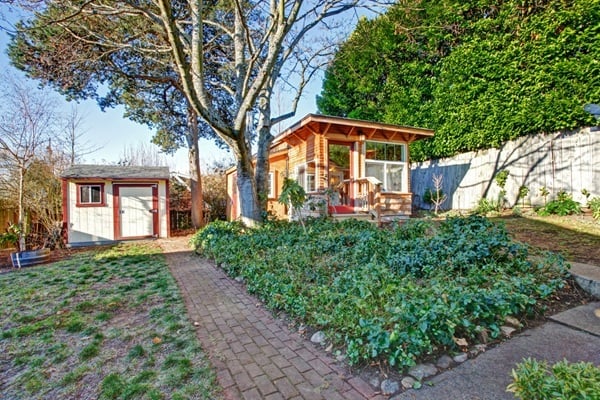
Here's an example: your home is insured for $400,000. Your standard homeowners policy can insure your detached structures for $40,000 in coverage. Depending on the size and use of the structure—such as a large garage, home office, or outdoor living space—$40,000 may not be sufficient to rebuild, especially given current construction costs.
Other Structures/Garage Home Insurance Gap Solution
When you review your homeowners coverage with your agent, start by comparing your Coverage B limit to the full replacement cost of all detached structures on your property. If the estimated cost to rebuild or replace those structures is higher than your current Coverage B amount, it may be wise to increase this limit or add extended or separate coverage—especially for higher-value, custom-built, or specialized buildings.
3. Natural Disasters Home Insurance Gap — Earthquakes, Flooding, and Hurricanes
Virginia’s weather is highly unpredictable and a variety of severe weather events and natural disasters affect homes every year. The Atlantic Basin's hurricane season can pose significant risks for Virginia homeowners. Spring and summer can bring tornadoes, and fall marks peak hurricane season for Virginians. Although earthquakes are not a frequent occurrence in the Commonwealth, Virginia experienced a magnitude 5.8 earthquake in 2011. Earthquakes can cause damage in areas not typically viewed as “high risk.” Flooding is also becoming more common across the Commonwealth, driven by our proximity to the Atlantic Ocean and the many rivers and tributaries throughout the state. Many homeowners underestimate the potential for damage when they live hours from the coast or outside Virginia’s seismic zones, but the effects of natural disasters can extend for hundreds of miles. Standard homeowners insurance does not cover damage from flooding or earthquake damage.
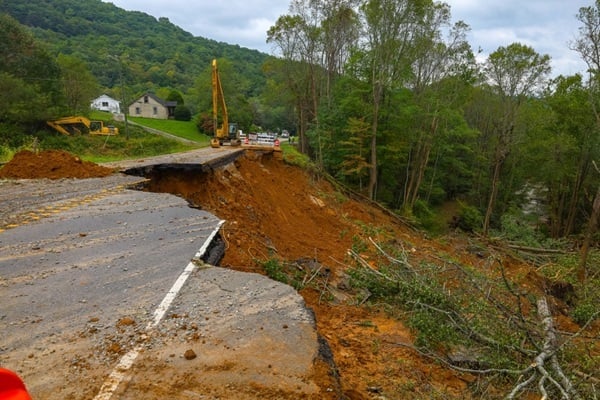
Landslides are most often triggered by periods of heavy, prolonged rainfall (including the remnants of tropical storms and hurricanes) or by rapid snowmelt. Human activities—such as excessively steep road cuts, improper grading, or inadequate drainage—can greatly increase the likelihood of landslides, even in lower-relief regions like Virginia’s Piedmont. Unlike mountainous landslides, Eastern Virginia is highly vulnerable to sinking ground movement, largely driven by large-scale groundwater extraction and compaction of ancient sediment layers. Events like mudslides, landslides, sinkholes, and earthquakes are almost universally excluded from standard property policies.
Natural Disaster Home Insurance Gap Solutions
-
Earthquakes and Ground Movement Insurance Solutions — Virginia has recorded earthquake activity for hundreds of years. Review Virginia seismic maps (opens in a new window) to understand your home’s risk, then discuss your coverage with your local agent. In many cases, earthquake insurance can be added to an existing homeowners policy. Northern Neck’s Superior Home Insurance product automatically includes Earthquake Coverage. While earth movement is covered with standalone earthquake policies, it only covers landslides if it was directly triggered by a seismic event.
-
Flood Insurance Solutions — Since standard home insurance does not cover flooding, it's important to see if your licensed insurance agent recommends purchasing a separate Flood Insurance Policy through the National Flood Insurance Program (NFIP) (opens in a new window) or a private insurer. You can also discuss other flood insurance endorsements available like our Inland Flood Endorsement for homes outside of the NFIP high-risk designated flood zones, but still more at risk for flood damage. When making these choices, it's very important to understand the distinction between NFIP flood insurance and inland flood insurance. If you already need flood insurance through the NFIP, you may be covered for "mudflows"—which behave like a river of liquid mud—but will deny claims for thick, debris-heavy landslides.
-
Hurricane Home Insurance Solutions — All of these potential damage causing disasters can leave you temporarily out of a home while your repairs and rebuilding takes place. Those expenses can add up quickly. Speak with your insurance advisor and consider Loss of Use Coverage to help pay for living expenses if your home becomes uninhabitable after a covered event. Loss of Use Coverage provides added costs—such as hotel stays, rentals, or meals—that exceed normal living expenses while property is repaired or replaced.
-
Landslide and Sinkhole Home Insurance Solutions — If you live on or near a slope, in an area recovering from wildfires, or in a region that experiences frequent heavy rainfall, you may need to look beyond a standard homeowners policy to address these risks. Start by checking whether your property is in a higher-risk landslide or earth-movement zone using Virginia’s Landslide Mapping Tool (opens in a new window). Your local insurance agent can also help you understand any known ground movement concerns in your area and advise whether additional coverage is appropriate. They may recommend an endorsement such as Sinkhole Collapse Coverage. In more severe risk situations, homeowners may need to explore a specialized Difference in Conditions (DIC) policy to obtain dedicated landslide coverage.

4. Liability Underinsurance Home Insurance Gap
We live in a very litigious world where lawsuits are commonplace and costly. Homeowners can be held financially responsible for dog bites injuries, swimming pool accidents, and even accidental falls that occur on their property. Standard home insurance does provide some coverage for these types of damages. Your home insurance liability coverage pays for third-party medical costs, property repairs, and legal defense fees, and follows you anywhere in the world, but only for non-vehicle accidents. The problem is most homeowners underestimate how much liability protection they actually need and may be underinsured and unprepared financially.
Liability Home Insurance Gap Solution
First, make sure your homeowners policy includes a minimum of $300,000–$500,000 in liability coverage. Then talk with your agent about whether a personal umbrella policy makes sense for your situation. Discuss your overall risk level, including factors such as owning a swimming pool, being active on social media, driving frequently, or regularly hosting guests. Next, compare your total net worth to the liability limits on your current policies. If your assets exceed those limits, additional coverage can help close the gap. An Personal Umbrella Coverage or extra liability endorsement typically provides $1 million or more in protection above your underlying home and auto policies and is usually a cost-effective way to add this broader safeguard.

5. Home Business/Side Hustle Home Insurance Gap
It's very popular today to run a small business from your home. Homeowners insurance is designed to protect your residence and personal belongings, not to cover business operations. This should not be confused with remote work for someone else. Home-based businesses may involve consulting, childcare, catering, retail sales, or freelancing. Any business-related property, inventory, and liabilities are usually not covered by your standard homeowners insurance and can result in a serious coverage gap, especially around liability claims.
Home Business Homeowners Insurance Gap Solution
Cover yourself and your business by adding a home business endorsement or a Small Business Policy (BOP) to protect against business-related claims, property loss, and equipment damage. Businesses that rely on client foot traffic may also require more of the liability coverage we mentioned in the last section. If you use your car for your business, read more about how your car insurance may not cover that activity.
6. Sewer Water Backup/Service Line Home Insurance Gap
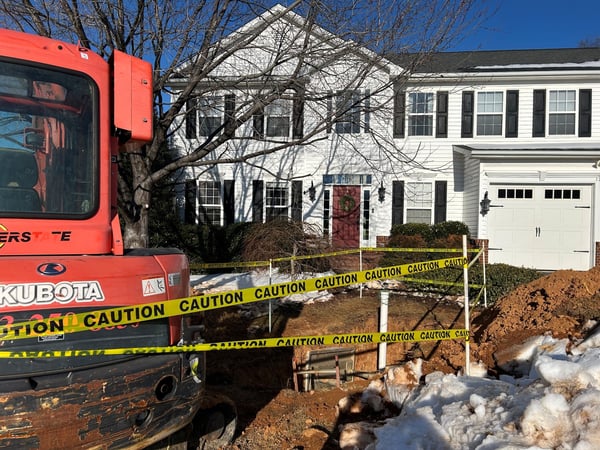
It’s one of the most unpleasant experiences a homeowner can face — sewage or water backing up into your basement or home due to clogged or broken lines or heavy rain. Most homeowners policies exclude this type of damage entirely, which can mean paying out-of-pocket for professional cleanup, mold remediation, and ruined personal property and even a costly exterior excavation project for more than $10,000. Standard homeowners insurance only covers accidental water damage from internal sources like burst pipes. It does not cover water or sewage backing up from an overwhelmed city drain, tree roots, or sump pump failure.
Water Backup/Service Line Home Insurance Gap Solution
To help prevent interior flooding from sewer or drain backups, homeowners can take several proactive steps. These include installing and regularly maintaining a sump pump, keeping gutters and downspouts clear and in good repair, choosing tree species and planting locations carefully to avoid root intrusion, and adding a reasonably priced home insurance endorsement to a standard homeowners policy.
When shopping for additional insurance coverage, note that Sewer Backup Coverage is not the same as Service Line Coverage. Sewer Backup Coverage can help pay for interior cleanup and repairs when wastewater or sewage enters your home. Service Line Coverage, by contrast, helps cover the cost to locate, excavate, and repair the underground pipe that runs from your house to the municipal main if it breaks, collapses, or is damaged by issues such as tree roots. Your insurance agent can help you evaluate your risks and select the combination of coverages that best fits your home's needs.

7. High-Value Personal Property Limits Home Insurance Gap
Your standard home insurance policy’s personal property coverage helps protect everyday belongings such as furniture, clothing, and electronics. The gap can come into play because it typically includes lower “sub-limits” for certain higher-value categories. High-value items are often only covered for a combined total of about $1,500–$2,500, which can be less than their true value. Standard home insurance policies also usually exclude accidental loss and accidental damage while they cover damage from a peril such as a house fire. Some items that may qualify include valuable jewelry, antiques, rare collections, musical instruments, or high-end technology.
High-Value Personal Property Gap Solution
Determining whether you need Scheduled Personal Property Coverage is usually fairly straightforward. This additional protection is important if you own high-value items that exceed the standard sub-limits in your base homeowners policy. It is generally recommended for individual pieces valued at more than $1,000–$2,000 and can also provide coverage for accidental loss. If you are unsure about an item’s value, a professional appraisal can help you confirm whether it exceeds your policy’s built-in limits. Consult your local agent for more information on this coverage.
8. Equipment Breakdown Home Insurance Gap
Just as a standard homeowners policy helps protect everyday belongings such as furniture, clothing, and electronics, it generally does not cover the cost to repair or replace appliances and home systems when they fail due to a sudden mechanical or electrical breakdown. Damage caused by issues like motor burnout, electrical short circuits, or a seized compressor—problems that affect the internal workings of equipment—is typically excluded from standard homeowners. And this type of unexpected damage to a home's HVAC unit or heat pump could be costly.
Equipment Breakdown Home Insurance Gap Solution
First, review whether your appliances and home systems are still covered under any manufacturer or buyer warranties, and make sure you understand the specific terms and limitations of those warranties. Next, consider the value of your home’s equipment and whether repairing or replacing certain appliances would be financially burdensome without additional coverage.
It is important not to confuse Equipment Breakdown Coverage with a separate home warranty. A home warranty can be purchased after the manufacturer’s warranty expires and is generally more expensive than adding this home insurance endorsement. With Northern Neck’s Superior Homeowners policy, Equipment Breakdown Coverage is automatically included. Keep in mind that normal wear and tear, neglect, and inadequate maintenance are not covered, nor is damage caused by electrical surges or by rust and corrosion. In addition, both home warranties and Equipment Breakdown Coverage apply only to specified types of equipment, not every item in your home.
The Value of a Personalized Policy Review
Do not wait for an uncovered loss to expose a gap in your protection. Our local experts are here to help. Regularly reviewing your insurance policies with an independent insurance agent helps ensure they keep pace with your current needs and provide appropriate protection against emerging risks. As your life and financial situation change, keeping adequate savings in place and updating your policies in a timely manner can reduce coverage gaps and help you avoid unexpected expenses when it matters most. Consider Northern Neck Insurance for the most affordable yet comprehensive home insurance coverage solutions in Virginia.
Sources:
https://energy.virginia.gov/geology/Landslides.shtml
https://www.fema.gov/flood-insurance
https://energy.virginia.gov/geology/EQHazardMapping.shtm
THE NORTHERN NECK INSURANCE INTEGRITY PROMISE — We pledge to provide straight talk and good counsel from our NNINS Virginia insurance experts through our blog. While we hope you find this to be a helpful source of information, it does not replace the guidance of a licensed insurance professional, nor does it modify the terms of your Northern Neck Insurance policy in any way. All insurance products are governed by the terms in the applicable insurance policy.