After a fender bender on southbound I-95 in my minivan, I had three child car seats and one important question: Were they still safe to use? The seats looked fine, but my sister and friends from our playgroup urged me to replace them. The manufacturer recommended replacing them after any collision, too.
As I looked into it, I learned that the answer depends on both the crash and the car seat manufacturer’s instructions. The National Highway Traffic Safety Administration (NHTSA) says replacement isn’t automatically necessary after a minor crash, but you should always follow your manufacturer’s guidance. If the manufacturer says to replace the seat after any collision, that’s the advice to follow.
Car Seat Crash Research
After a crash, deciding whether to replace your child’s car seat starts with reliable guidance, not just how the seat looks. The National Highway Traffic Safety Administration (NHTSA) provides five criteria for identifying a minor crash. All five must be met for the crash to qualify as minor under its guidance. NHTSA recommends replacing car seats after a moderate or severe crash, while replacement isn’t automatically necessary after a minor one.
Your car seat manufacturer’s instructions still matter. Check the manual or contact the manufacturer before using the seat again, even if there’s no visible damage. If the manufacturer requires replacement after any collision, follow that instruction regardless of whether the crash meets NHTSA’s minor-crash criteria.
At NNIC, our decades of auto insurance experience on Virginia’s roads help us offer practical guidance as you work through the next steps. Below, we’ll explain the crash criteria to review and what to consider if your seat needs replacing. We’ll also share ways to dispose of an unsafe seat responsibly so it doesn’t find its way into another family’s vehicle.
When to Replace Your Child’s Car Seat after a Crash
Just answer 5 simple questions (NTHSA). If you answer yes to just ONE question about your car accident, it is considered a severe crash and you should replace your child's car seat, even if your child was not in the car seat when the collision occurred:
- Was the vehicle unable to be driven away from the crash site?
- Was there damage to the door closest to the car seat?
- Did any passenger in your car have injuries?
- Was your car unable to drive away from the accident?
- Did airbags deploy?
- Is there visible damage to the car seat?
If you answered no to every question, replacement may not be necessary under NHTSA’s minor-crash guidelines. Before using the seat again, check the manufacturer’s instructions and follow any requirement to replace it after a collision. Take a moment to check the seat’s expiration date and look for recalls (opens in a new window), too. If you’re unsure whether it can still be used, contact the manufacturer for guidance.
If you answered yes to one of the 5 questions, you’ll need to replace your car seat. Make sure you purchase a new seat that meets Federal Safety Standards & NHTSA’s strict crash performance standards. You can never absolutely know for sure the accident history of a recycled car seat from a peer-to-peer second hand marketplace.
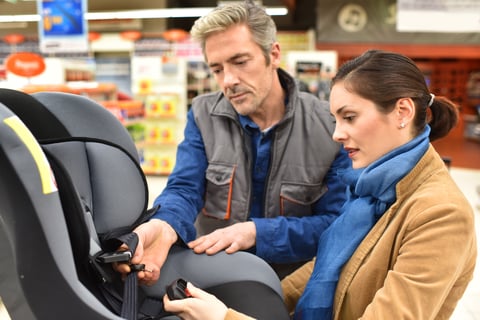
How to Dispose of a Damaged Car Seat
If your child’s car seat needs replacing, check with your county’s waste management department or local retailers about recycling programs and car seat trade-in events. Some events may offer a discount toward a replacement, but check the program’s current requirements before bringing in your seat.
If recycling or trade-in options aren’t available, contact your trash service or local landfill to confirm how to dispose of it. Before putting the seat out for trash collection, Lori, our onsite auto claims expert, recommends cutting the harness straps to help prevent reuse. Don’t donate, sell, or give away a seat that is no longer safe to use. These steps help keep an unsafe seat out of another family’s vehicle.
Does Car Insurance Cover Child Car Seat Replacement?
Your car insurance may help pay to replace your child’s car seat after a covered loss, depending on your policy and the circumstances. Collision and comprehensive coverage are optional coverages in Virginia, and either may apply to car seat replacement, depending on what happened.
Collision coverage generally helps pay for damage to your vehicle from a crash with another vehicle or an object. Comprehensive coverage generally helps pay for damage from non-collision events, such as fire, theft, or certain weather-related losses. Whether either coverage pays for a replacement car seat depends on your policy’s terms, limits, and any applicable deductible.
Before disposing of the seat, contact your local independent agent or claims adjuster to ask whether replacement is covered and what documentation you’ll need. They can explain how your coverage applies to your situation.

Sources:
https://www.nhtsa.gov/car-seats-and-booster-seats/car-seat-use-after-crash
https://www.nhtsa.gov/recalls#car-seats
THE NORTHERN NECK INSURANCE INTEGRITY PROMISE — We pledge to provide straight talk and good counsel from our NNIC Virginia insurance experts through our blog. While we hope you find this to be a helpful source of information, it does not replace the guidance of a licensed insurance professional, nor does it modify the terms of your Northern Neck Insurance policy in any way. All insurance products are governed by the terms in the applicable insurance policy.